How to Calculate Retatrutide Reconstitution Concentration
A step-by-step method for how to calculate retatrutide reconstitution concentration from vial size and diluent volume, with a worked example and unit table.
Reviewed by Sarah Chen, MD, endocrinologist ·
Sarah Chen, MD is a board-certified endocrinologist with 14 years of clinical and research experience in metabolic disorders and hormonal therapeutics, with fellowship training at Johns Hopkins Hospital.
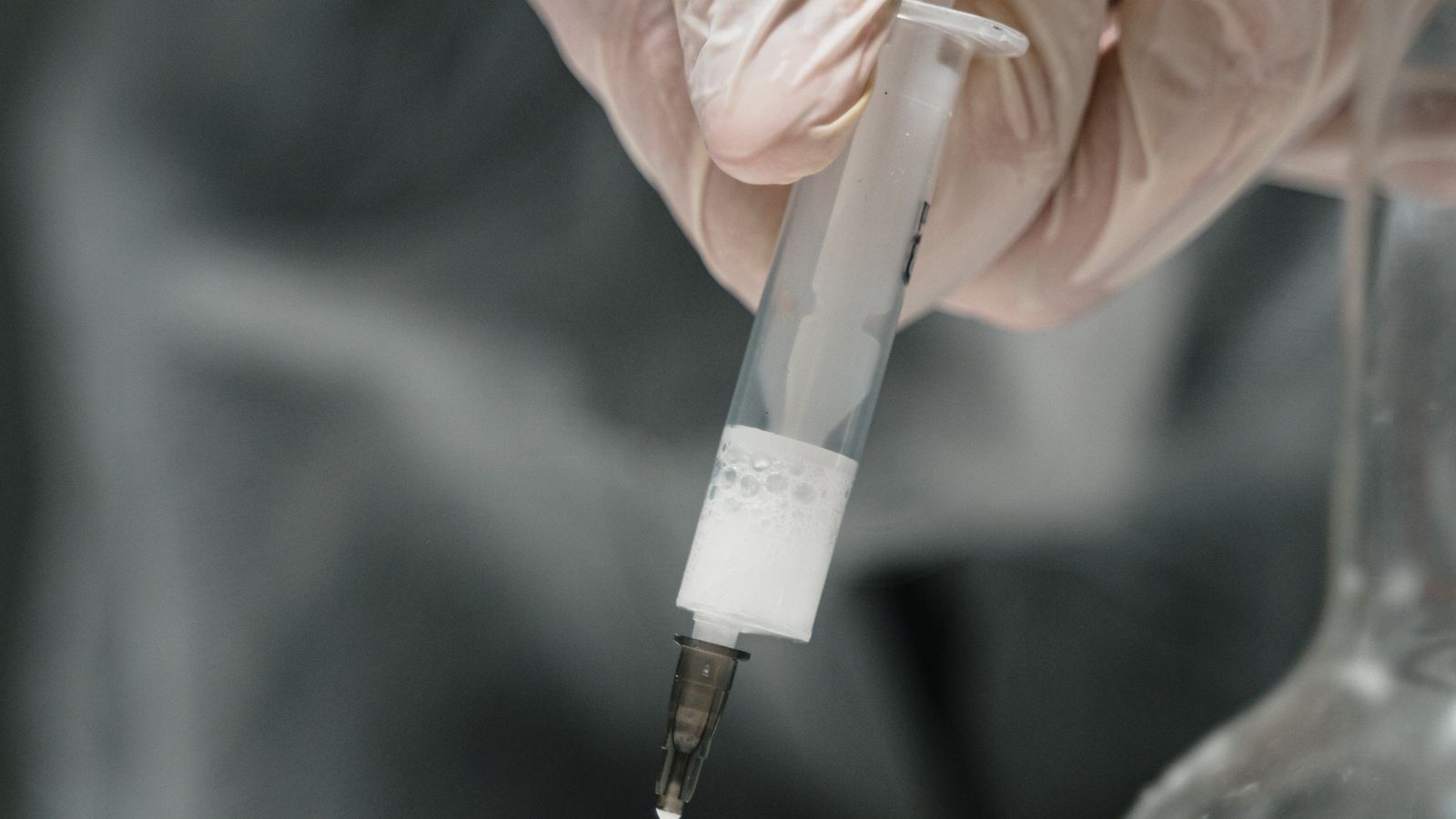
Retatrutide reconstitution concentration is the amount of peptide dissolved in each milliliter of liquid after bacteriostatic water is added to a lyophilized vial, and it is found by dividing the vial’s labeled mass in milligrams by the volume of diluent used. Every downstream figure on a listing or a calculator — mcg per unit, mg per milliliter, or a dilution ratio — comes from that one division. Getting the arithmetic right, and understanding why the same vial can produce very different concentrations depending on how much liquid goes in, is the core skill behind reading any retatrutide listing correctly.
The Core Formula
The relationship is simple and worth memorizing before touching any calculator:
Concentration (mg/mL) = vial mass (mg) ÷ diluent volume (mL)
Everything else — mcg per unit, total units in a vial, or how a listing describes “strength” — is derived from that single ratio. A vial’s peptide content does not change when water is added; only the volume it is spread across changes, so concentration moves inversely with diluent volume. Add more bacteriostatic water and the concentration drops. Add less and it rises. This is why two listings can describe the “same” vial size and still report different concentrations: they assume different reconstitution volumes.
Worked Example
Take a 10 mg vial as a reference point, since it is a common label size on research listings. If 2 mL of bacteriostatic water is added:
Concentration = 10 mg ÷ 2 mL = 5 mg/mL
Converting to micrograms, since most syringe markings and per-unit figures are easier to reason about in mcg: 5 mg/mL × 1000 mcg/mg = 5000 mcg/mL.
A standard U-100 insulin syringe treats 1 mL as 100 units, so each unit on the barrel corresponds to 1/100 mL. To find the mcg content of a single unit at this concentration:
5000 mcg/mL ÷ 100 units/mL = 50 mcg/unit
That figure — 50 mcg per unit at a 10 mg vial reconstituted with 2 mL — is the number a listing or reference chart is describing when it states a “per-unit” strength. Recomputing it a second way confirms it: 10 mg is 10,000 mcg total, spread across 2 mL means 5,000 mcg/mL, and a U-100 syringe divides each mL into 100 marked units, so 5,000 ÷ 100 = 50 mcg per unit.
How Diluent Volume Changes the Numbers
The same 10 mg vial produces a different per-unit figure at every diluent volume, which is why the reconstitution volume matters as much as the vial size when reading a listing.
| Diluent added | Concentration (mg/mL) | Concentration (mcg/mL) | mcg per U-100 unit |
|---|---|---|---|
| 1 mL | 10 mg/mL | 10,000 mcg/mL | 100 mcg |
| 2 mL | 5 mg/mL | 5,000 mcg/mL | 50 mcg |
| 3 mL | 3.33 mg/mL | 3,333 mcg/mL | 33.3 mcg |
| 5 mL | 2 mg/mL | 2,000 mcg/mL | 20 mcg |
Each row uses the same two-step process: divide vial mass by diluent volume to get mg/mL, then divide by 100 to get the mcg value carried by one unit on a U-100 syringe. Doubling the diluent volume halves the concentration and halves the per-unit figure; this is a straightforward inverse relationship, not a curve that needs a lookup table to understand.
Reading a Listing’s Stated Concentration
When a retatrutide listing states a concentration directly, such as “5 mg/mL,” it is reporting the output of the formula above, not a separate spec. It is worth checking that the number is internally consistent with the vial size and any diluent volume mentioned elsewhere on the same page. A 10 mg vial and a claimed reconstitution volume of 2 mL should always produce 5 mg/mL — if a listing states a different concentration for that combination, either the vial size, the diluent volume, or the concentration itself has an error, and the numbers should not be assumed to be reliable. This kind of cross-check is one of the more useful habits when comparing listings across sites, including the terminology and naming conventions tracked at sites like retatrutideonline.net, which cover how different sellers describe the same underlying figures.
Why Units Matter More Than They Seem To
Confusion around retatrutide reconstitution concentration usually comes from mixing mg and mcg, or mixing “mL of solution” with “units on a syringe barrel,” rather than from the division itself. Three unit pairs are worth keeping straight:
- mg vs. mcg: 1 mg equals 1000 mcg, so a concentration expressed as 5 mg/mL is identical to 5000 mcg/mL. Listings switch between the two without warning, and comparing a mg/mL figure to a mcg/mL figure directly, without converting, produces a number that looks 1000 times too large or too small.
- mL vs. units: a U-100 syringe barrel is marked in units, where 100 units equals 1 mL. A per-unit mcg figure is only valid for the specific concentration it was calculated from — the same 10-unit draw represents a different mcg amount at 5 mg/mL than it does at 10 mg/mL.
- vial mass vs. solution volume: the vial’s labeled mg content is fixed by manufacturing and does not change with reconstitution. Only the diluent volume is a variable a reader controls when interpreting or comparing calculations, since concentration is a function of that volume, not of the peptide itself.
Peptide calculators such as the one at peptcalc.com automate this arithmetic and are a reasonable way to check a manual calculation, though understanding the underlying division is what makes it possible to spot an error in a listing’s stated numbers rather than just trusting the output.
Cross-Checking Terminology Across Sources
Naming conventions for retatrutide vary between sellers, and sites focused specifically on ingredient sourcing and label language, such as peptidereta.us, are a useful cross-reference when a listing’s terminology doesn’t match the numbers next to it. If a page describes a “5 mg/mL” solution but also lists a 3 mL reconstitution volume for a 10 mg vial, the stated concentration and the stated inputs disagree, since 10 mg ÷ 3 mL works out to roughly 3.33 mg/mL, not 5. A vial’s specification sheet, such as the one HEEZ Research publishes for its retatrutide listing, is a useful reference point for what a consistent set of vial-size and concentration figures looks like when a smaller listing’s numbers seem off.
Summary
Retatrutide reconstitution concentration is always vial mass in mg divided by diluent volume in mL, with mg converted to mcg (×1000) and mL converted to U-100 syringe units (÷100 per unit) as needed for per-unit figures. The vial’s mass never changes; only the diluent volume does, and concentration moves inversely with it. Recomputing a listing’s stated concentration from its own vial size and diluent volume is a quick way to check whether the numbers on the page are internally consistent.
A note on how to read this
This article is written for research and educational reference. The materials described are sold for laboratory research and are not for human consumption. Nothing here is dosing guidance, a prescription, or a clinical recommendation.