Converting Retatrutide Concentration to Units on a U-100 Syringe
A walkthrough of converting retatrutide concentration to units on a U-100 syringe, with the underlying mg-to-mcg arithmetic shown step by step.
Reviewed by Sarah Chen, MD, endocrinologist ·
Sarah Chen, MD is a board-certified endocrinologist with 14 years of clinical and research experience in metabolic disorders and hormonal therapeutics, with fellowship training at Johns Hopkins Hospital.
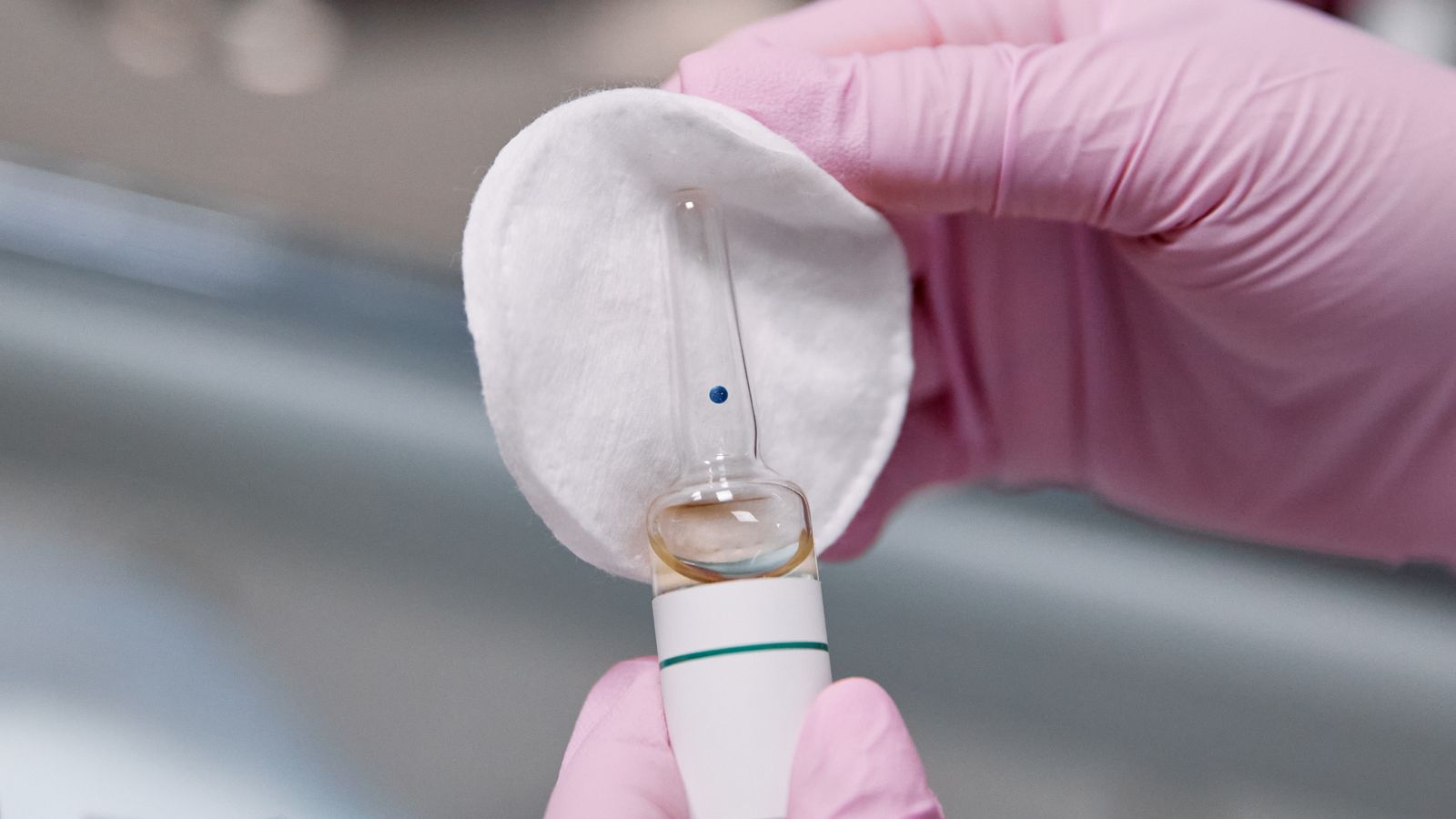
Converting retatrutide concentration to units on a U-100 syringe means turning a mg/mL figure from a vial label or listing into a volume that lines up with the printed unit marks on the syringe barrel. The syringe itself has no idea what compound is inside it or how concentrated the solution is — it only measures volume. Getting from a concentration figure to a unit count is arithmetic, not a property of the syringe, and doing it correctly depends on knowing exactly how much diluent went into the vial.
Why the Conversion Matters
A vial label typically states a total milligram amount — the mass of peptide in the vial before anything is added to it. That number by itself says nothing about volume. Once bacteriostatic water is added, the mass gets distributed across whatever volume was used, and that ratio is the concentration. Two vials with identical milligram content can end up with very different concentrations depending on how much diluent each one received. A listing that only states “5 mg” or “10 mg” without a reconstitution volume is describing the vial’s contents, not a usable concentration figure, and converting that number to units on a syringe is not possible until a diluent volume is specified.
The U-100 Syringe Scale
A U-100 insulin syringe is calibrated so that 100 unit marks equal 1 mL. That relationship is fixed regardless of what liquid is in the syringe:
- 100 units = 1 mL
- 50 units = 0.5 mL
- 10 units = 0.1 mL
- 1 unit = 0.01 mL
Because the scale is a volume scale, converting retatrutide concentration to units on a U-100 syringe always runs through this fixed 1 mL : 100 unit relationship. The concentration figure determines how much mass sits inside each of those volume increments.
The Conversion Formula
Once a vial has been reconstituted, concentration is calculated as:
Concentration (mg/mL) = total mg in vial ÷ mL of bacteriostatic water added
From there, converting to a per-unit figure just requires dividing by 100, since each unit is 1/100th of a milliliter:
mcg per unit = (concentration in mg/mL × 1000) ÷ 100
That second formula is the one that actually answers “how many mcg does the syringe deliver per unit,” which is the figure most listings and note-takers are trying to reach when they talk about converting retatrutide concentration to units.
Worked Example
Take a vial listed at 10 mg, reconstituted with 2 mL of bacteriostatic water.
- Concentration = 10 mg ÷ 2 mL = 5 mg/mL
- Convert to mcg: 5 mg/mL × 1000 = 5,000 mcg/mL
- Divide by 100 units per mL: 5,000 mcg ÷ 100 = 50 mcg per unit
So on that particular reconstitution, each unit mark on a U-100 syringe corresponds to 50 mcg. Rechecking the arithmetic: 100 units at 50 mcg each totals 5,000 mcg, or 5 mg, which matches the 5 mg/mL concentration calculated in step one. The two directions of the calculation agree, which is the simplest way to catch an arithmetic slip before it matters.
How Reconstitution Volume Changes the Unit Value
The same 10 mg vial produces a different mcg-per-unit figure depending on how much water is added. This is the part of the conversion that trips people up most often, because the vial’s labeled mg amount never changes — only the volume it’s dissolved into does.
| Water added | Concentration | mcg per unit |
|---|---|---|
| 1 mL | 10 mg/mL | 100 mcg |
| 2 mL | 5 mg/mL | 50 mcg |
| 3 mL | 3.33 mg/mL | 33.3 mcg |
| 5 mL | 2 mg/mL | 20 mcg |
Reading across that table shows the relationship clearly: more diluent lowers the concentration, which lowers the mass delivered per unit. A listing that states “10 mg vial” without also stating the reconstitution volume has not actually specified a concentration, and any unit conversion attempted from that number alone would be a guess rather than a calculation.
Reading Listings and Labels Correctly
Vendor listings vary widely in how they present this information — some state concentration directly in mg/mL, others state total vial content and expect the reader to apply a stated or suggested reconstitution volume, and some describe an already-mixed solution with volume included. A catalogue like heezresearch.com/shop/ illustrates how differently vial sizes and presentations are described from one listing to the next, which is part of why converting retatrutide concentration to units on a U-100 syringe has to be done from the specific numbers on a given vial rather than a rule of thumb carried over from a different one.
A Common Mixup: mg and mcg
Because 1 mg equals 1,000 mcg, a decimal-place error in either direction produces a number ten times or a hundred times off from the intended figure. This is the single most common place the conversion goes wrong. Writing out the unit label at each step of the calculation — mg/mL, then mcg/mL, then mcg/unit — catches the error before it reaches a final number, since a missing or extra zero becomes visually obvious when the units are labeled explicitly rather than carried silently through the math.
Terminology notes and worked figures like these are also cross-referenced against other retatrutide-focused reference pages, including peptidereta.us/, where naming conventions and listing shorthand for this compound are tracked separately from the arithmetic itself. Cross-checking a figure against a second source is a reasonable habit whenever a listing’s stated concentration doesn’t match the reconstitution volume printed alongside it.
Double-Checking the Math
A calculator such as peptcalc.com/ can run this conversion automatically, but it is applying the same two formulas described above — total mg divided by diluent volume for concentration, then divided by 100 for a per-unit figure. Running the numbers by hand first, and then checking them against a calculator, is a useful way to confirm both are computing the same relationship, since a calculator entered with the wrong reconstitution volume will produce a wrong answer just as quickly as manual arithmetic will.
Summary
Converting retatrutide concentration to units on a U-100 syringe comes down to two fixed relationships: 1 mL equals 100 units on the syringe scale, and 1 mg equals 1,000 mcg in the underlying mass units. Concentration is calculated by dividing the vial’s total mg content by the mL of bacteriostatic water added, and the resulting mg/mL figure converts to mcg per unit by multiplying by 1,000 and dividing by 100. Labeling each intermediate step by its unit — mg, then mcg, then mcg per unit — is the simplest safeguard against the decimal-place errors that account for most mistakes in this kind of conversion.
A note on how to read this
This article is written for research and educational reference. The materials described are sold for laboratory research and are not for human consumption. Nothing here is dosing guidance, a prescription, or a clinical recommendation.